

Tamil Nadu Launches AVGC-XR Policy 2026
Tamil Nadu's five-year AVGC-XR Policy 2026 targets 200+ startups, 2 lakh jobs, and a 20% national market share by 2030, backed by ₹300 crore in combined funding.


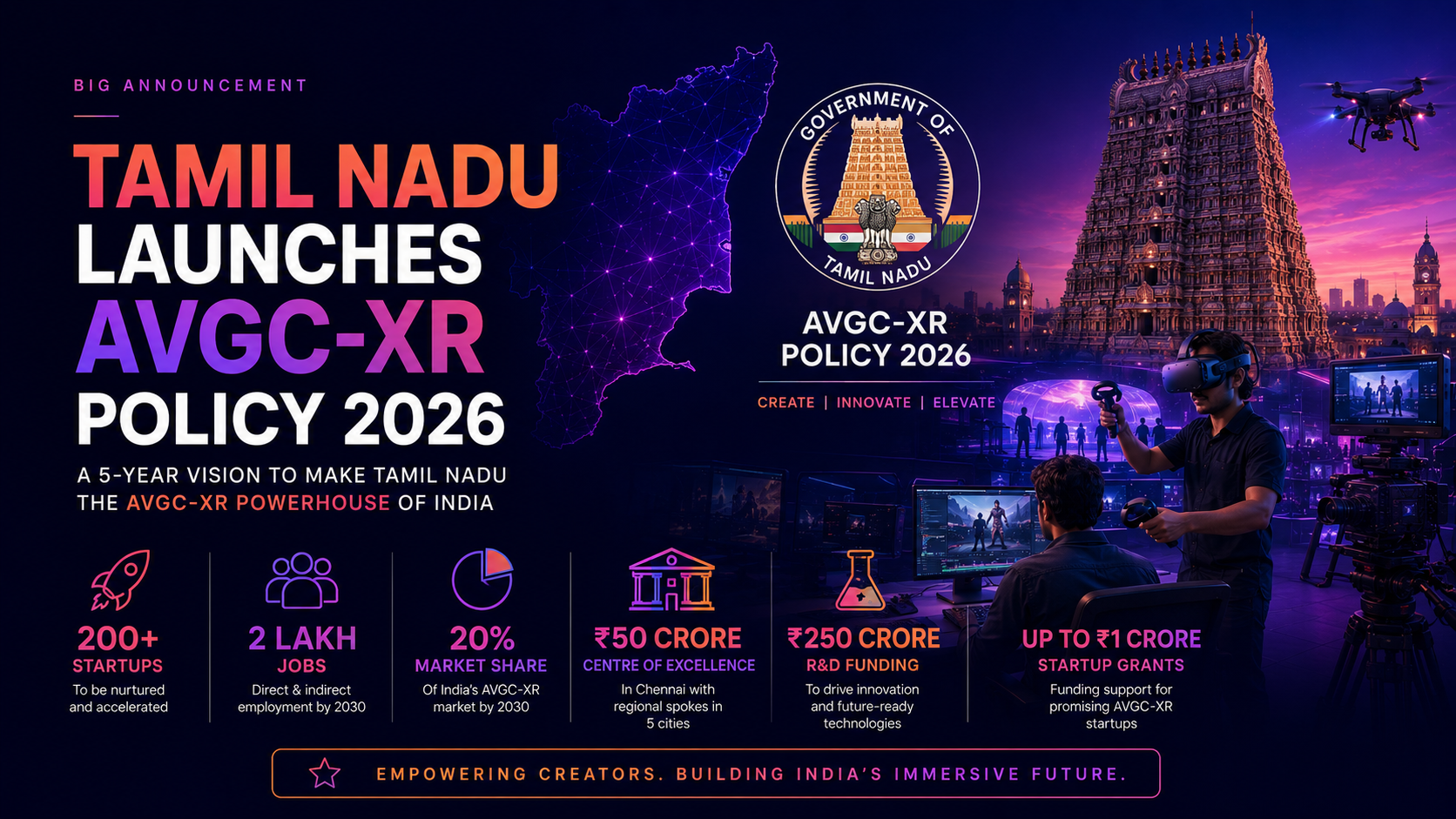
Tamil Nadu charts an ambitious AVGC-XR course
On March 12, 2026, the Government of Tamil Nadu formally approved its AVGC-XR Policy 2026 — a comprehensive five-year framework that sets out some of the most ambitious targets for any state-level creative industries policy in India. The policy covers animation, visual effects, gaming, comics, and extended reality (XR), and positions Tamil Nadu as a serious contender for national leadership in this rapidly growing sector.
The headline targets are striking: more than 200 new startups, 2 lakh direct jobs, and a 20% share of India's total AVGC-XR market by 2030. These are not merely aspirational numbers — they are backed by specific institutional commitments, infrastructure investments, and funding mechanisms designed to translate policy intent into measurable outcomes.
The Centre of Excellence and regional network
Central to the policy is the establishment of a ₹50-crore Centre of Excellence in Chennai. This institution is designed to serve as the sector's anchor — providing advanced research, prototyping capabilities, industry partnerships, and a hub for technology transfer. Crucially, the Chennai centre will not operate in isolation. Regional spokes are planned in five additional cities across Tamil Nadu, ensuring that the benefits of the AVGC-XR policy are distributed across the state rather than concentrated in the capital.
This hub-and-spoke model reflects a sophisticated understanding of how creative industries ecosystems develop. By creating multiple centres of gravity, Tamil Nadu is working to prevent the talent and capital concentration that has historically made Mumbai, Bengaluru, and Hyderabad the default choices for AVGC investment. Cities like Coimbatore, Madurai, and Tiruchirappalli have untapped pools of technical and creative talent that a distributed policy framework is better placed to mobilise.
Funding for R&D and startups
The policy also includes ₹250 crore dedicated to research and development — a commitment that signals a long-term view of the sector's technological evolution. As AI, real-time rendering, and immersive technologies continue to reshape production workflows, sustained R&D investment is essential for staying at the cutting edge of global practice. Tamil Nadu's R&D commitment positions the state to be a technology contributor, not merely a service provider, to the global AVGC industry.
For early-stage ventures, the policy introduces startup grants of up to ₹1 crore — meaningful seed funding that can bridge the gap between idea and viable product. Combined with the Centre of Excellence's mentorship and networking infrastructure, these grants create a supportive environment for first-time founders in the creative tech space.
Competing with India's established AVGC hubs
Tamil Nadu's AVGC-XR Policy 2026 arrives at a moment when several states are competing to attract creative industry investment. Karnataka, Maharashtra, Telangana, and now Tamil Nadu have all made significant policy commitments to the sector. This inter-state competition, while commercially driven, ultimately benefits the industry as a whole by raising standards, expanding infrastructure, and creating more options for studios, startups, and professionals seeking locations to grow.
For the AVGC sector nationally, Tamil Nadu's ambitious policy is a positive signal — evidence that the creative industries are being taken seriously as economic engines, not just cultural assets, at the highest levels of state governance.
Discussion
No comments yet. Be the first to share your thoughts!