

Indian Institute of Creative Technologies Mumbai Goes Live
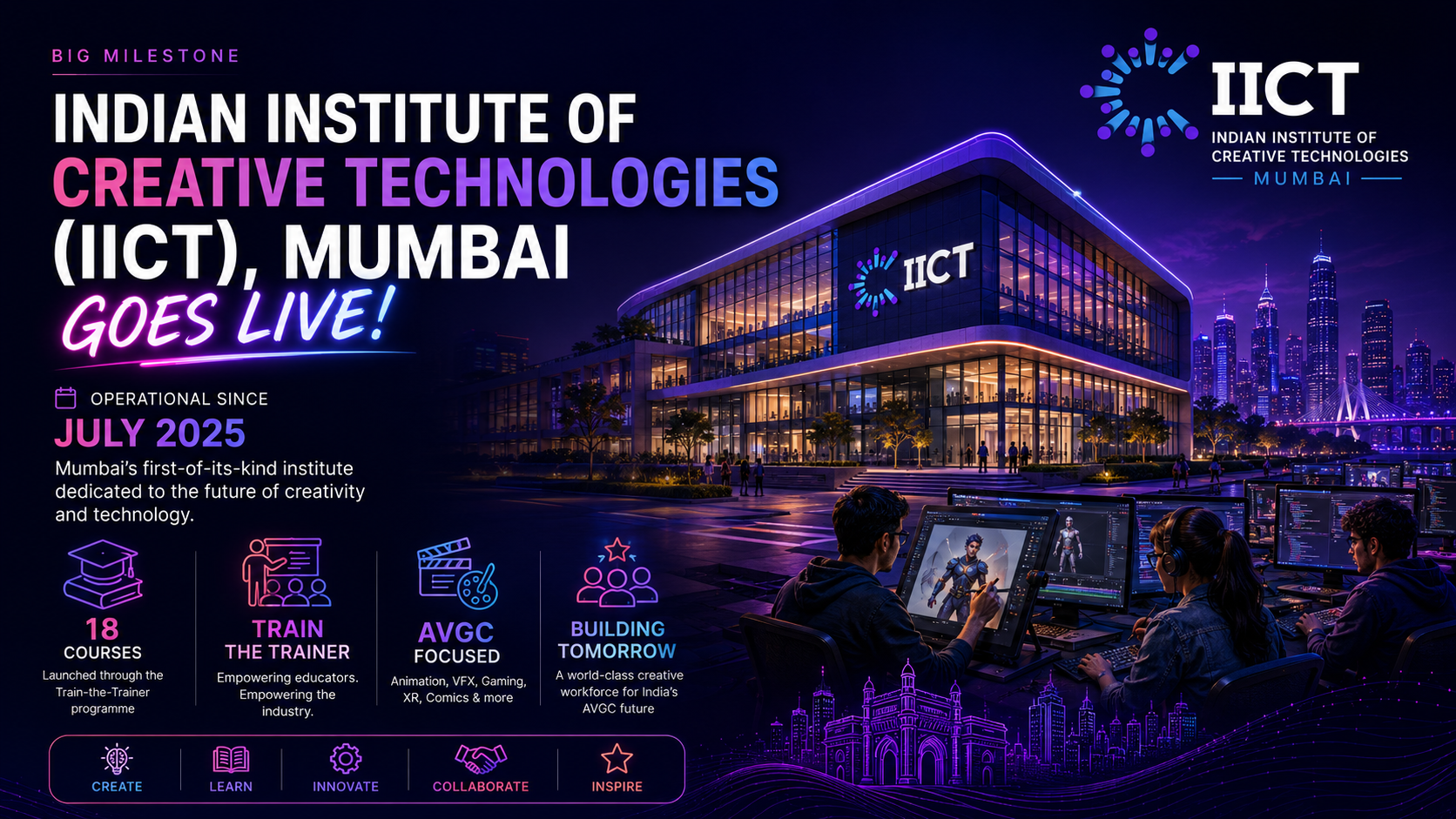
IICT Mumbai, operational since July 2025, has launched 18 courses through its Train-the-Trainer programme, marking Maharashtra's most direct intervention in building an AVGC workforc


A new institution for India's creative economy
The Indian Institute of Creative Technologies — IICT — opened its doors in Mumbai in July 2025, and by September of that year it had already launched 18 courses through its flagship Train-the-Trainer programme. In doing so, it marked what many in the industry consider Maharashtra's most direct and meaningful intervention to date in building a skilled workforce for the AVGC sector.
The IICT was conceived as a response to a structural gap that has long constrained India's creative industries: the distance between the talent that studios need and the talent that educational institutions are producing. While India has no shortage of aspiring animators, VFX artists, game developers, and creative technologists, the quality, currency, and industry-alignment of training has been inconsistent — varying enormously between prestigious private institutions and the broader ecosystem of smaller colleges and vocational centres.
The Train-the-Trainer model
The IICT's choice to lead with a Train-the-Trainer programme is strategically astute. Rather than attempting to directly train tens of thousands of students — which would require enormous faculty, infrastructure, and time — the institution is investing in upskilling educators who will then carry enhanced teaching capabilities into hundreds of colleges and training centres across the state.
The multiplier effect of this approach is significant. Each educator trained by IICT potentially influences dozens or hundreds of students over subsequent years. If the programme succeeds in meaningfully elevating the quality of AVGC instruction at the trainer level, the downstream impact on the talent pipeline could be far greater than any direct-teaching model of comparable scale and cost.
Curriculum design and industry alignment
The 18 courses launched in the initial phase cover a range of creative and technical disciplines — from animation fundamentals and character design to VFX compositing, game development, and immersive media production. The curriculum has been developed in consultation with industry stakeholders, ensuring that what is taught reflects what studios and production companies actually need from entry-level hires.
This industry alignment is crucial. One of the persistent criticisms of AVGC education in India has been a lag between curriculum design and professional practice — students learning techniques that are outdated by the time they graduate, or receiving instruction on software versions no longer used in production environments. IICT's institutional mandate to remain connected to current industry practice represents a structural attempt to close this gap.
Mumbai's AVGC ecosystem and the IICT's role
Mumbai has long been India's entertainment capital, home to Bollywood, major advertising studios, and a substantial VFX industry that services both domestic and international productions. The establishment of IICT in this ecosystem creates proximity between training and employment — a geographic advantage that should accelerate the transition from education to professional practice for IICT graduates and the students of IICT-trained educators. As the institute matures and expands its course offerings, it has the potential to become a defining institution for India's creative industries workforce of the next decade
Discussion
No comments yet. Be the first to share your thoughts!